Newsletter Subscribe
Enter your email address below and subscribe to our newsletter
Enter your email address below and subscribe to our newsletter

 ByJohn A
The ship design process is one of the most complex and carefully planned engineering journeys in the maritime industry. Every vessel, whether it is a cargo ship, offshore support vessel, passenger ferry, tugboat, naval craft, or research vessel, begins as an idea before it becomes a fully operational structure on water. Modern ship design combines naval architecture, marine engineering, structural analysis, hydrodynamics, safety regulations, environmental standards, and practical construction planning. Because ships must operate safely in harsh marine environments, every stage of the process requires accuracy, testing, and close coordination between designers, owners, engineers, classification societies, and shipyards.
At its core, ship design is not only about creating a vessel that floats. It is about developing a complete marine solution that meets the owner’s operational goals, cargo requirements, speed expectations, fuel efficiency targets, crew comfort needs, and regulatory obligations. A successful vessel must balance performance, stability, strength, cost, sustainability, and long-term maintainability. Therefore, the journey from concept to final construction involves multiple design phases, each one refining the vessel until it is ready for production and delivery.
The first stage of ship design begins with the concept phase, where the purpose and mission of the vessel are clearly defined. This is the foundation for every decision that follows. During this stage, the shipowner or operator identifies what the vessel must do, where it will operate, what cargo or equipment it will carry, how fast it should travel, how many crew members it will support, and what type of regulations it must follow. For example, the design requirements for a container ship are very different from those of a platform supply vessel, cruise ship, fishing vessel, or offshore wind service vessel. Each vessel type has unique operational needs, and these requirements shape the entire design direction.
In this early phase, naval architects prepare basic studies to determine whether the proposed vessel is technically and economically practical. They consider key parameters such as length, breadth, draft, displacement, deadweight, cargo capacity, propulsion type, fuel system, endurance, and operating route. At the same time, market conditions and construction budgets are reviewed because ship design must be financially realistic as well as technically sound. A vessel that performs well on paper but is too expensive to build or operate may not be suitable for commercial use. As a result, designers often compare several concept options before choosing the most efficient arrangement.
Another important part of concept development is understanding regulatory requirements. International maritime rules, classification society standards, safety codes, and environmental regulations influence the vessel’s size, structure, machinery, stability, lifesaving equipment, emissions systems, and onboard layout. For instance, ships operating internationally may need to comply with IMO regulations, SOLAS safety requirements, MARPOL pollution prevention rules, and class society guidelines. Because of this, compliance is built into ship design from the beginning rather than added at the end. A strong concept phase reduces costly design changes later and gives the project a clear technical roadmap.
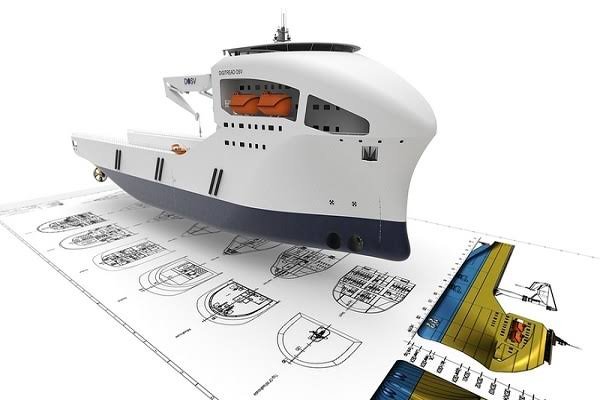
After the concept is approved, the project moves into the preliminary ship design stage. This phase transforms the original idea into a more developed technical solution. Naval architects create early drawings, hull form options, general arrangement plans, weight estimates, stability calculations, and powering predictions. These studies help determine whether the vessel can meet performance targets while remaining safe, efficient, and buildable. Preliminary design is especially important because small decisions made here can affect fuel consumption, construction cost, cargo capacity, and operational performance for decades.
One of the most important tasks in preliminary ship design is developing the hull form. The hull must provide enough buoyancy, stability, speed, and seakeeping ability while minimizing resistance through water. Designers use hydrodynamic principles, computer modeling, and sometimes model testing to evaluate how the hull will perform in different sea conditions. A vessel with poor hull efficiency may consume more fuel, struggle in rough seas, or fail to meet speed requirements. Therefore, the hull shape must be carefully optimized based on the vessel’s mission. For cargo ships, the focus may be maximum carrying capacity and low fuel consumption, while for fast patrol vessels, speed and maneuverability may be more important.
During this stage, engineers also estimate the ship’s weight distribution. Every major component, including steel structure, engines, generators, tanks, cargo systems, accommodation spaces, deck machinery, and safety equipment, contributes to the vessel’s total weight. Accurate weight control is essential in ship design because it directly affects draft, stability, freeboard, fuel efficiency, and payload capacity. If weight is underestimated, the final vessel may sit too low in the water or fail to carry its intended cargo. Therefore, designers maintain weight margins and update calculations as the design develops.
The preliminary phase also includes early cost analysis. Shipbuilding involves major investments in materials, machinery, labor, engineering, testing, and class approvals. By reviewing cost estimates at this stage, the owner and design team can make informed decisions before the project becomes too advanced. In many cases, several design alternatives are compared to find the best balance between performance and affordability. This makes preliminary ship design a critical bridge between creative concept planning and practical engineering development.
Read Also: Emerging Trends in Cloud Security Solutions
Once the preliminary design is accepted, the project enters the detailed engineering phase. This is where ship design becomes highly technical and precise. Detailed design includes structural drawings, machinery layouts, electrical systems, piping diagrams, ventilation plans, accommodation design, fire safety systems, navigation equipment placement, tank arrangements, and production-ready documentation. Every part of the vessel must be defined clearly so the shipyard can build it correctly and classification societies can review it for compliance.
Structural engineering is one of the most important parts of detailed ship design. Ships face bending, twisting, wave loads, cargo loads, vibration, corrosion, and impact risks throughout their service life. Therefore, the hull structure must be strong enough to withstand these forces while avoiding unnecessary weight. Designers calculate plate thickness, frame spacing, bulkhead arrangements, deck strength, and support structures based on class rules and operational requirements. Modern software tools allow engineers to perform finite element analysis, load simulations, and fatigue assessments to improve safety and durability. This ensures the vessel is not only strong but also efficient in material use.
Machinery and systems design is another major area. The main engine, propulsion system, auxiliary engines, pumps, compressors, cooling systems, fuel tanks, ballast systems, bilge systems, steering gear, and emergency power systems must all work together reliably. In modern ship design, energy efficiency and environmental performance are increasingly important. Designers may consider diesel-electric propulsion, hybrid systems, LNG fuel, battery support, shore power connections, waste heat recovery, or advanced emission control technology depending on the vessel type. These choices affect not only construction cost but also long-term operating expenses and regulatory compliance.
Detailed engineering also focuses on onboard functionality and safety. Crew accommodation, bridge visibility, escape routes, firefighting systems, lifesaving appliances, cargo handling equipment, maintenance access, noise control, and vibration reduction must be carefully planned. A well-designed vessel improves crew efficiency, reduces operational risk, and supports easier maintenance. At this stage, ship design becomes a complete technical package, linking every structural and mechanical detail into one coordinated construction plan.
Before final construction begins, the ship design must go through approval by relevant authorities and classification societies. Classification societies such as Lloyd’s Register, DNV, ABS, Bureau Veritas, or other recognized organizations review the vessel’s drawings, calculations, materials, safety systems, and construction standards. Their role is to confirm that the vessel meets technical rules for strength, stability, machinery safety, fire protection, pollution prevention, and overall seaworthiness. Without proper approval, a vessel may not be accepted for commercial operation, insurance, financing, or international trade.
The approval process involves submitting many technical documents. These may include hull structure drawings, stability booklets, general arrangement plans, fire control plans, machinery diagrams, electrical load analysis, piping schematics, tank capacity plans, lifesaving equipment layouts, and environmental compliance documents. Each document is reviewed for accuracy and rule compliance. If problems are found, the design team must revise the drawings and resubmit them. This back-and-forth review is normal in professional ship design because regulations are detailed and vessel systems are highly interconnected.
Stability approval is especially critical. A ship must remain safe in different loading conditions, weather situations, and emergency scenarios. Designers analyze intact stability, damage stability, cargo loading cases, ballast conditions, and worst-case operating conditions. This ensures the vessel can resist capsizing and continue operating safely even if compartments are flooded or loads shift. For passenger ships, offshore vessels, tankers, and specialized ships, stability requirements can be particularly strict.
Environmental compliance is another growing focus in modern ship design. Regulations related to emissions, ballast water treatment, sewage discharge, fuel sulfur limits, energy efficiency, and underwater noise may influence the vessel’s equipment and operating profile. As shipping moves toward cleaner technology, designers must consider future compliance as well as current rules. A vessel built today may remain in service for 20 to 30 years, so forward-thinking design can protect the owner from expensive retrofits later. Approval and classification therefore ensure that the vessel is safe, legal, insurable, and ready for construction.
After design approval, the ship design package moves into the construction stage. At this point, the shipyard converts engineering drawings into a physical vessel. However, ship construction is not a simple assembly process. It requires detailed production planning, material procurement, steel cutting, block fabrication, welding, outfitting, machinery installation, painting, testing, and quality control. The success of final construction depends heavily on the accuracy and completeness of the design documentation.
Modern shipbuilding usually follows a block construction method. The ship is divided into large sections or modules called blocks. These blocks are fabricated separately and then joined together in a dry dock or on a slipway. This method improves efficiency because different teams can work on multiple sections at the same time. Piping, cable trays, foundations, insulation, and equipment may be installed inside blocks before they are assembled. Therefore, ship design must account for construction sequence, access requirements, lifting points, welding procedures, and installation timing.
Production drawings are more detailed than basic engineering drawings. They tell the shipyard exactly how plates should be cut, how structures should be welded, where pipes should run, where cables should be routed, and how machinery should be installed. Computer-aided design and 3D modeling help reduce clashes between systems. For example, a pipe route may conflict with a ventilation duct or electrical cable tray if coordination is poor. Detecting these issues digitally before construction saves time and prevents costly rework.
Quality control is also essential during construction. Surveyors inspect materials, welds, machinery installation, pressure tests, electrical systems, coatings, and safety equipment. Classification society representatives may visit the shipyard at different stages to verify compliance with approved plans. Good ship design supports smooth construction by reducing ambiguity, improving coordination, and giving the shipyard a practical path from steel plates to a complete vessel.
The final phase of the ship design and construction process includes testing, commissioning, sea trials, and delivery. Before a vessel is handed over to the owner, every major system must be inspected and tested. This includes engines, generators, propulsion, steering gear, navigation equipment, communication systems, alarms, fire detection, firefighting systems, pumps, ballast systems, cargo equipment, lifesaving appliances, electrical panels, and emergency systems. Testing confirms that the vessel performs as designed and is ready for safe operation.
Harbor trials are usually conducted before sea trials. During harbor trials, the vessel remains at the shipyard or berth while engineers test onboard systems under controlled conditions. Machinery is started, electrical systems are energized, pumps are operated, alarms are checked, and safety systems are verified. Any defects found during this stage must be corrected before the vessel goes to sea. This process is important because it reduces risk during open-water testing.
Sea trials are the real-world performance test of the vessel. During sea trials, the ship is operated under actual conditions to confirm speed, maneuverability, fuel consumption, stopping distance, turning circle, vibration levels, noise levels, engine performance, steering response, and overall seaworthiness. The trial team may include the owner’s representatives, shipyard engineers, naval architects, classification society surveyors, and equipment suppliers. If the vessel meets the agreed performance standards, it moves closer to final acceptance.
After successful trials, final documentation is completed. The owner receives certificates, manuals, as-built drawings, maintenance documents, equipment records, class certificates, safety documents, and operational instructions. Any remaining minor issues are listed and resolved through a punch list. Once the vessel is formally accepted, it is delivered to the owner and begins its operational life. This final stage proves that the ship design has successfully moved from concept to construction and from engineering drawings to a working marine asset.
Ship design is the complete engineering process of planning, developing, analyzing, and documenting a vessel before and during construction. It includes hull design, structural engineering, propulsion planning, stability analysis, safety systems, regulatory compliance, and production drawings.
Ship design is important because it determines how safely, efficiently, and economically a vessel will operate. A strong design improves performance, fuel efficiency, cargo capacity, crew safety, maintenance access, and long-term reliability.
The main stages include concept development, preliminary design, detailed engineering, classification approval, production planning, construction, testing, sea trials, and final delivery.
Ship design is usually handled by naval architects, marine engineers, structural engineers, electrical engineers, system designers, classification societies, shipowners, and shipyard production teams.
The timeline depends on vessel size, complexity, regulatory requirements, and customization. A small vessel may take months to design, while a large commercial or specialized vessel may require several years from concept to delivery.
The ship design process is a detailed journey that turns an operational idea into a safe, efficient, and fully functional vessel. From the earliest concept studies to final sea trials, every stage requires careful engineering, practical planning, and regulatory compliance. A successful ship design balances performance, safety, cost, sustainability, and construction efficiency. It must satisfy the shipowner’s business goals while meeting strict maritime standards and real-world operating conditions.
As the maritime industry continues to evolve, modern ship design is becoming more advanced, digital, and environmentally focused. Designers now consider cleaner propulsion, energy efficiency, automation, crew comfort, emissions reduction, and lifecycle maintenance from the start. Whether the vessel is built for cargo transport, offshore operations, defense, fishing, research, or passenger service, the quality of its design shapes its success for decades. In the end, effective ship design is the foundation of every reliable vessel that moves across the world’s oceans.